

Hello, my “Walking with Jesus” friends on this Tuesday,
Unless you happen to live in one of only a few countries in the world, especially those with long family Monarchies or Dictatorships, you are familiar with frequent changes of government leadership and often the tumultuous times those government changes bring, right?
In our journey through God’s “Grand Narrative” the next section of the Bible in the Kings & the Chronicles gives us the story of the tumultuous years following the traumatic breakup of the nation of Israel into two kingdoms: Israel (Northern Kingdom of 10 tribes) and Judah (Southern Kingdom of 2 tribes).
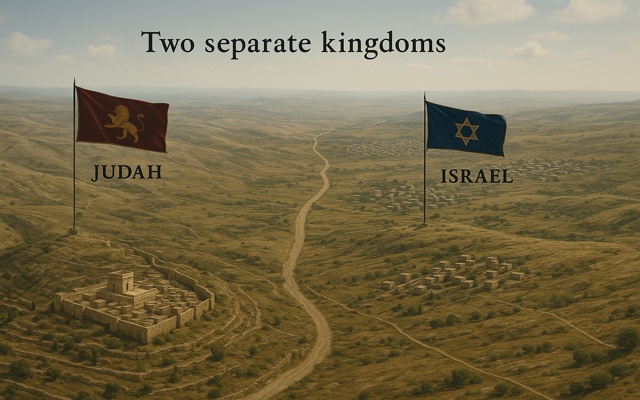
If you are a person who enjoys the history of nations, or if you like looking at an event from different perspectives, you will very much enjoy the journey ahead. 2 Chronicles 11 & 12 give us more detail of the interesting, 17-year reign of King Rehoboam, the son of King Solomon. It was in the very early days of King Rehoboam that 10 of the tribes of Israel separated themselves and selected Jeroboam, formerly one of Solomon’s trusted officials, to be their new king.
You’ll recall we saw in the days of Joshua, that the Levites were living scattered all across Israel, by God’s design, so the people of Israel had spiritual leaders easily accessible in all their towns.(Joshua 21) However, quickly after Israel split into two kingdoms, Jeroboam’s wicked, idol worshiping leadership, created antagonism in Israel against the God worshipping Levites so many of them fled their homes and moved to live in or near Jerusalem.
Pause… look around the world. How many places are Christians facing persecution, church burnings, pastors or priests arrested, tortured even killed!? That was the fearful atmosphere in Israel, if you can believe it, according to 2 Chronicles 11:13-17.
King Rehoboam did a very wise thing, naming his son Prince Abijah to be his eventual successor to the throne in Jerusalem, and sending his other Prince sons to be his representative in cities all around Judah. (2 Chron. 11:22,23) Sadly it appears Rehoboam focused more on building his government infrastructure and influence than on shepherding the people to be God honoring people. And only five years after King Solomon’s death, King Rehoboam and the people of Jerusalem faced an unexpected attack from Shishak the mighty king of Egypt. The record of this attack reminds me of how Russia amassed a huge army against little Ukraine only a few years ago. The record says: “With 1200 chariots and 60,000 horsemen and innumerable foot soldiers…King Shishak captured the fortified cities of Judah and came as far as Jerusalem.” (2 Chron. 12:3,4)
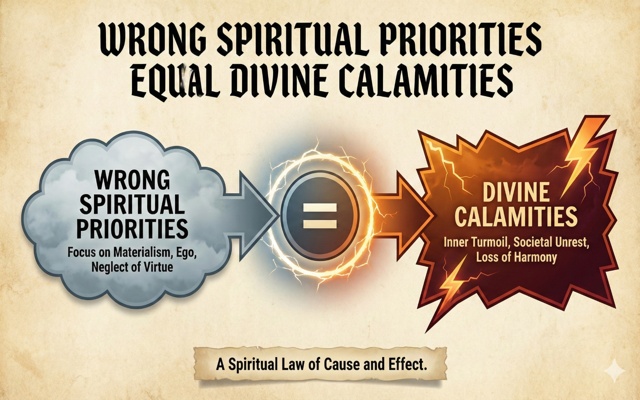
While God protected Jerusalem, this time, from destruction by such a huge army, Egyptian Shishak did carry off a great deal of the valuables King Solomon had amassed during his 40 years of extravagant reign, including valuables from the Temple of God! (2 Chron. 12:9) King Rehoboam and all Jerusalem were learning an important, hard lesson. Prioritizing government growth and power over spiritual and moral development of the people… will result in calamity!
Crown Prince Abijah was watching closely and learning from the leadership mistakes of his father King Rehoboam. When Abijah followed his father as King of Judah, even though he reigned only 3 years, Abijah and the people of Judah experienced God’s great rescue and protection from a similar enemy attack because they relied on the God of Israel! 2 Chronicles 12&13 give us that remarkable victory story which shaped the next several decades of peace, prosperity and blessing in Jerusalem under the reign of Abijah’s son King Asa!
Because the nation of Israel became two kingdoms after the death of King Solomon in 930bc, as we follow God’s Grand Narrative it will become a bit more challenging, for it’s important to read SIMULTANEOUSLY the parallel accounts found in the ‘Kings’ and the ‘Chronicles’. Keep in mind, my friends, we are traveling the historical record of TWO separate nations, Israel (northern kingdom 10 tribes) and Judah (southern kingdom 2 tribes).
While King Rehoboam, son of Solomon and grandson of David, reigned 17 years over the small, two tribe nation of Judah with capital city Jerusalem; King Jeroboam reigned 22 years as the first King of the 10 breakaway tribes and they retained the name Israel for their kingdom… Now be careful friends to remember the distinction between Judah and Israel, because all those people are descendants of Abraham, Isaac and Jacob, but now separated into two kingdoms with increasing animosity toward each other.

Under Jeroboam’s reign, Israel rapidly became a wicked, idol worshiping, violent and even vicious people. Unlike the nation of Judah, whose kingship followed from father to son, trying to preserve the family lineage of King David; the kingship of Israel often changed hands violently. While Jeroboam’s son Nadab followed his father as leader of Israel, he reigned only two years and was murdered by an Israelite from the tribe of Issachar named Baasha. (1 Kings 14:19,20; 15:25-28)
As often happens in power-authority tribal societies, Baasha sought to wipe out the entire family of Jeroboam and Nadab so none of their sons would try to reclaim the throne! (1 Kings 15:29,30) Baasha’s reign of terror lasted 24 years and he was succeeded by his son Elah, both of whom were evil, wicked men. (1 Kings 15:27-1 Kings 16:8) King Elah was assassinated by one of his military commanders, Zimri (1 Kings 16:9,10) and Zimri did to Baasha and Elah’s family what they had done to Jeroboam’s family, with total annihilation of every male. (1 Kings 16:11-13) As you read these bloody records of violent regime change, you’ll see frequent reference to the fact that God was using it to inflict judgment and remove evil, wicked leaders.
After a reign of only 1 week, yes 7 days, Zimri committed suicide rather than be captured by another Israelite military faction seeking the throne! (1 Kings 16:15-20) Omri was the name of the military leader supported by most of the military, so he became Israel’s next king, and he reigned for 12 years. It was King Omri who began the city of Samaria which eventually became the capital of the northern kingdom of Israel. (1 Kings 16:23-26) Omri was an incredibly wicked, military man promoting idolatry and violence in Israel more than any leader before him, and Omri raised up a son to do the same. That son was named Ahab who reigned over Israel from Samaria for 22 years. King Ahab is famous for marrying Jezebel! Remember that name? And together they led Israel far from God into passionate worship of the false god Baal! (1 Kings 16:30-33)
Whew! Let’s pause and catch our breath for a few seconds. King Ahab came to power in Israel in 874bc, only 56 years after King Solomon had died! 56 years! That’s only two generations! But oh my, so many terrible things had happened both in Jerusalem and the southern kingdom of Judah, and in the break-away, adversarial, idol worshiping northern kingdom of Israel. While King Ahab and Queen Jezebel were very wicked and powerful, their world was about to turn upside down because tomorrow, we’ll watch as they meet a very courageous prophet of God named Elijah!! (1 Kings 17)
For today, of course we have additional important notes below in the “Grand Narrative” link and a wonderful worship song link at the end of our study, may I leave you with these questions to ponder?
1. What have you learned as you evaluate the changes of government in your country during your lifetime?
2. How would you describe the moral and spiritual atmosphere of your nation, your city NOW and is it trending better or worse? Why?
3. What is the role of your church and the Christians in your city, in leading moral and spiritual improvement? What difference are you making?
I’ll be waiting for you here tomorrow my friends, here’s that worship song link…
Today’s Scripture: 1 Kings 14-16.
Choose below to read or listen.
 |  |
1 Kings 15
1 Kings 16
Bible images provided with attribution to www.LumoProject.com.
Have a comment or question about today’s chapter? I’m ready to hear from you, contact me here.

Pastor Doug Anderson
“Let us run with perseverance the race marked out for us, with our eyes fixed on Jesus…” (Heb. 12:1,2)
Archived back issues of “Walking with Jesus” and other resources are available by clicking here to open our ‘home page’ (or go to HOME at upper right of this page).
Share with friends. Subscribe below for daily “Walking with Jesus”.