
📘 LESSONS LEARNED
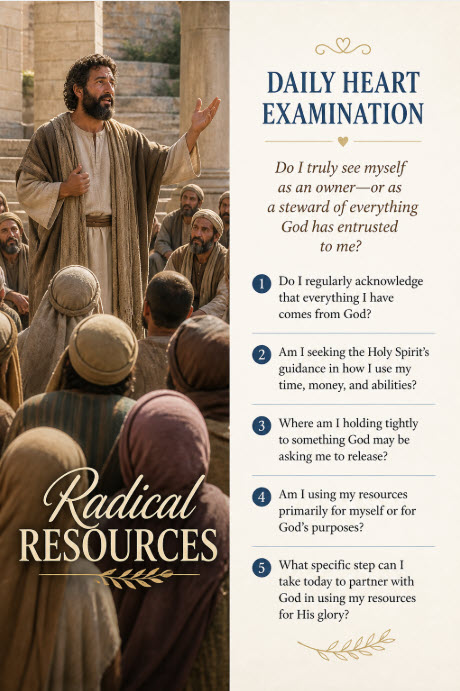
God owns all resources and entrusts them to us as stewards, expecting Spirit-led management for His purposes and glory.
💥 SINS / FAILURES
- Viewing resources as personal ownership rather than God’s stewardship (Deuteronomy 8:17–18; Psalm 24:1)
- Using resources primarily for self instead of God’s purposes (Luke 12:15–21; James 4:3)
- Ignoring the Holy Spirit’s prompting in how to use time, money, and abilities (Acts 7:51; Ephesians 4:30)
- Limiting “resources” to money while neglecting time, talents, and relationships (1 Peter 4:10; Colossians 3:23)
- Resisting sacrificial obedience when God leads to give or act (Mark 10:21–22; Hebrews 3:15)
🏆 SUCCESSES / SPIRITUAL GROWTH
- Recognizing God as the true owner and provider of all things (Deuteronomy 8:18; James 1:17)
- Responding quickly to the Holy Spirit’s leading in resource use (Acts 4:36–37; Romans 12:1)
- Living with an open-handed mindset toward possessions (Matthew 6:19–21; 1 Timothy 6:18)
- Using time, talents, and relationships intentionally for God’s purposes (Ephesians 5:15–16; 1 Peter 4:10)
- Experiencing joy in partnering with God to meet real needs (Acts 20:35; 2 Corinthians 9:7)
🧭 LEADERSHIP DYNAMICS
- Leaders must model sacrificial stewardship (Acts 4:36–37; 1 Corinthians 11:1)
- Teaching must redefine ownership as stewardship under God (Psalm 50:10–12; Haggai 2:8)
- Spiritual growth requires practical application, not just knowledge (James 1:22; Luke 6:46)
- Clear doctrine on resources produces visible community impact (Acts 4:32–35; Matthew 5:16)
- God’s work through resources must always result in His glory, not human recognition (1 Peter 4:11; Isaiah 42:8)