
LESSONS LEARNED
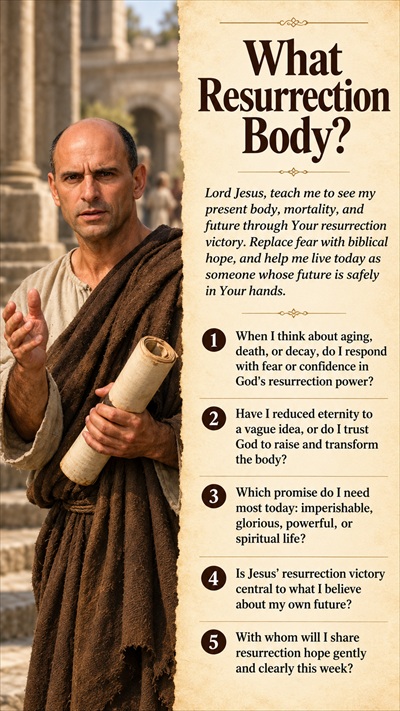
Monday October 5, 2026 — “What Resurrection Body?” (1 Corinthians 15:35–57). Paul directs our attention from the wonder and decay of present creation to God’s promise of bodily resurrection, transformation, and victory through Jesus Christ.
WATCH OUTS
- Do not reduce resurrection to vague survival of the soul. Paul repeatedly speaks about the body being raised and transformed, so Christian hope is embodied hope. (1 Corinthians 15:42–44; Romans 8:23).
- Do not assume present weakness, aging, disability, decay, or the manner of burial can defeat God’s resurrection power. The lesson emphasizes God’s ability to raise what is perishable. (1 Corinthians 15:42–44, 52–54; Philippians 3:20–21).
- Do not confuse resurrection with identical eternal outcomes for every person. This lesson emphasizes bodily resurrection; other passages distinguish resurrection to life from resurrection to judgment. (John 5:28–29; Revelation 20:11–15).
SUCCESSES / SPIRITUAL GROWTH
- Let the complexity of creation deepen worship. The God whose works display wisdom and power is not limited by the decay of the present body. (Psalm 19:1; Psalm 139:13–14).
- Anchor hope in Christ’s resurrection rather than in speculation about the mechanics of resurrection. Paul connects the future of God’s people to the risen Christ. (1 Corinthians 15:20–23, 47–49; 1 Peter 1:3).
- Face mortality with confidence in God’s promised transformation: perishable to imperishable, weakness to power, and mortality to immortality. (1 Corinthians 15:42–44, 53–57).
LEADERSHIP DYNAMICS
- Teach resurrection with concrete biblical contrasts rather than vague clichés. Paul gives memorable categories that help people understand Christian hope. (1 Corinthians 15:42–44).
- When people ask about cremation, burial at sea, catastrophic death, or bodily decay, direct them to God’s power rather than pretending Scripture explains every physical mechanism. (1 Corinthians 15:35–38, 42–44; Mark 12:24).
- Keep Jesus central. Resurrection hope is not confidence in human durability but confidence in the Lord who defeated death and gives victory. (1 Corinthians 15:54–57; John 11:25–26).
EKKLESIA PERSPECTIVE
- Build a church culture where aging, grief, and death are discussed honestly in the light of resurrection hope rather than avoided. (1 Thessalonians 4:13–18; 1 Corinthians 15:54–58).
- Use creation and resurrection teaching to cultivate worship across generations: children, adults, and older believers can all marvel at God’s design and promise. (Psalm 145:4–7; Psalm 139:13–14).
- Let resurrection confidence produce steadfast service now. Paul’s resurrection chapter ends by calling believers to give themselves fully to the Lord’s work. (1 Corinthians 15:57–58).