
LESSONS LEARNED
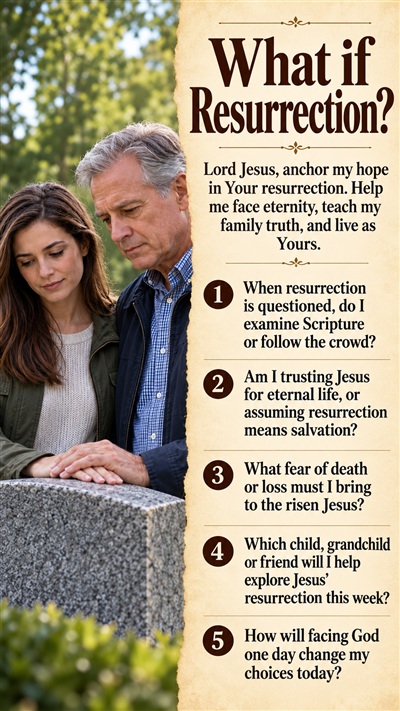
Thursday October 01, 2026 — “What if Resurrection?” (1 Cor. 15:20–22). Christ has indeed been raised. Paul moves from the hopeless consequences of denying His resurrection to the hope and responsibility this truth brings to our families and our eternal future.
WATCH OUTS
- Do not let ridicule decide what you believe about Jesus. Examine the apostolic testimony and test claims against Scripture (1 Corinthians 15:3–8, 12–20; Acts 17:11).
- Do not confuse resurrection with automatic salvation. Jesus speaks of resurrection to life and resurrection to judgment; eternal life is received through faith in Him (John 5:24, 28–29; Acts 24:15).
- Do not leave your family’s understanding of death and eternity to assumption. Teach God’s Word honestly and remember that every person will answer to Him (Deuteronomy 6:6–7; Hebrews 9:27; John 3:16–18).
SUCCESSES / SPIRITUAL GROWTH
- Anchor hope in the risen Jesus rather than in changing feelings. His resurrection is central to the gospel and the source of living hope (1 Corinthians 15:17–20; 1 Peter 1:3–5).
- Grieve honestly while trusting Christ’s promise for His people. Death is real, but those who belong to Him will be raised at His coming (1 Corinthians 15:20–23; 1 Thessalonians 4:13–18).
- Let resurrection hope shape today’s choices. Give yourself to faithful service because life in Christ gives your labor lasting significance (1 Corinthians 15:58; Colossians 3:1–4).
LEADERSHIP DYNAMICS
- Invite sincere questions and teach with patience. Help children and adults examine Scripture instead of shaming them for uncertainty (Deuteronomy 6:6–7; 2 Timothy 2:24–25).
- Explain Adam and Christ carefully: sin and death entered through Adam, while righteousness and life come through Jesus. Keep Paul’s promise to those who belong to Christ clear (Romans 5:12, 17–19; 1 Corinthians 15:21–23).
- Speak about eternity with both urgency and gentleness. Offer the hope of the gospel without manipulating grief or using fear as entertainment (1 Peter 3:15–16; 2 Corinthians 5:20; John 3:16–18).
EKKLESIA PERSPECTIVE
- Keep Christ’s death and resurrection central to the church’s shared message. The gospel rests on what God has done, not on the approval of the surrounding culture (1 Corinthians 15:1–8; Acts 4:33).
- Become a community that comforts grieving people with truth and practical care. Resurrection hope should make us more compassionate in sorrow (1 Thessalonians 4:13–18; Romans 12:15).
- Build a habit of studying, discussing and sharing Scripture across generations. Help one another understand the lesson and live it in worship and service (Colossians 3:16–17; 2 Timothy 2:2; James 1:22).