
“Truth or Distortion Discernment” (2 Cor. 3:16-18; 1 John 2:15-17)
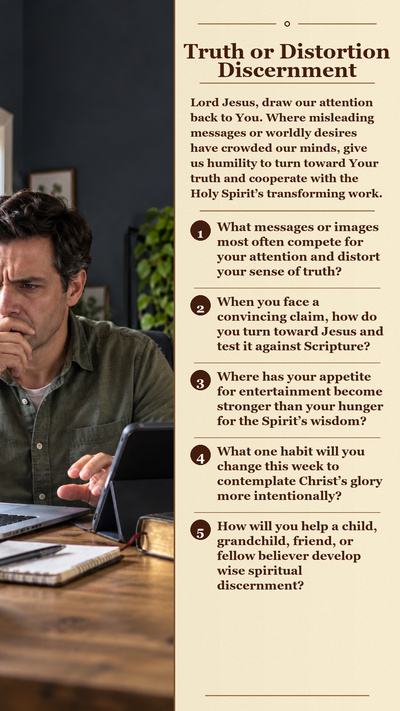
Scroll down for “Lessons Learned…”
LESSONS LEARNED
On Wednesday, October 21, 2026, “Truth or Distortion Discernment” (2 Corinthians 3:16–18; 1 John 2:15–17) challenges believers to distinguish truth from seductive distortions. As we turn to Jesus and contemplate His glory, the Holy Spirit works to transform our character and strengthen discernment amid constant information and cultural pressure.
WATCH OUTS
- Distortion can look convincing. Paul warns of teaching that can turn hearers from God’s reliable truth; test persuasive claims rather than merely their presentation. (2 Corinthians 11:3–4; 1 John 4:1; Acts 17:11)
- An unexamined media appetite can shape the heart. The pastor calls attention to the influence of habitual screen exposure and entertainment on values and desires. (1 John 2:15–17; Romans 12:2; Philippians 4:8)
- Spiritual discernment cannot be reduced to education or age. No one should assume information, status, or experience automatically produces Spirit-led maturity. (2 Corinthians 3:16–18; James 1:5; 1 Corinthians 2:12–14)
SUCCESSES / SPIRITUAL GROWTH
- Turning to the Lord is the decisive response. Paul connects turning to the Lord with removal of the veil and the freedom associated with the Spirit. (2 Corinthians 3:16–17; John 8:31–32; Galatians 5:1)
- Contemplating Jesus changes a believer’s direction. The Holy Spirit forms increasing likeness to Christ as His glory becomes the focus. (2 Corinthians 3:18; Romans 8:29; Colossians 3:10)
- Renewed thinking produces practical discernment. A life reshaped by God rather than conformed to the world can better recognize His will. (Romans 12:2; Philippians 1:9–10; Hebrews 5:14)
LEADERSHIP DYNAMICS
- Leaders must test teachings before passing them on. Corinthian believers faced persuasive false teaching; faithful leadership separates reliable apostolic truth from distortion. (1 John 4:1; Acts 20:28–30; 2 Timothy 4:2–4)
- Parents and mentors must train discernment deliberately. The pastor explicitly asks how children and grandchildren are being equipped for information overload. (Deuteronomy 6:6–7; Ephesians 6:4; Proverbs 22:6)
- Character formation matters as much as information transfer. Leaders should model attention to Christ and resistance to spiritual distraction. (2 Corinthians 3:18; 1 Timothy 4:12; Titus 2:7–8)
EKKLESIA PERSPECTIVE
- The church is a community of unveiled, transforming people. Paul’s “we all” places the Spirit’s work of transformation within the shared life of Christ followers. (2 Corinthians 3:18; Ephesians 4:15–16; 1 Corinthians 12:12–13)
- Every believer can seek wisdom for discerning truth. The pastor stresses that age, gender, ethnicity, or special education does not restrict access to the Spirit’s work. (James 1:5; 1 Corinthians 2:12–14; Galatians 3:28)
- A healthy congregation helps each other resist worldly captivity. Mutual exhortation redirects attention to Jesus rather than destructive patterns of desire. (Hebrews 3:13; Colossians 3:16; 1 Thessalonians 5:11)