
LESSONS LEARNED
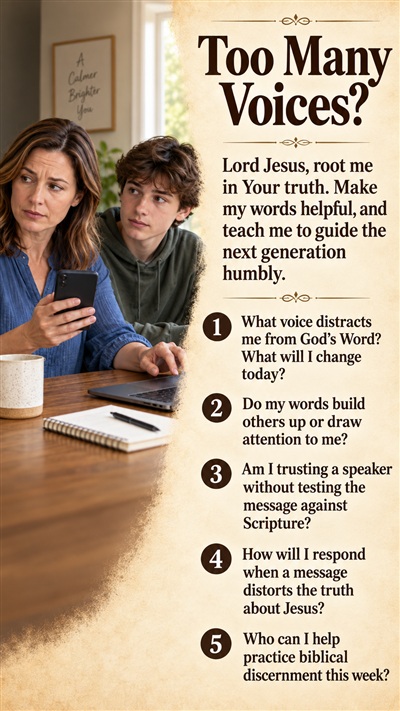
Monday September 28, 2026 — Too Many Voices? (1 Corinthians 14). Which voices are shaping your trust? Paul calls us to understandable speech, careful discernment, and words that build up the church.
WATCH OUTS
- Do not confuse a confident voice with a trustworthy message; examine what is taught before accepting or sharing it (1 Corinthians 14:29; 1 John 4:1).
- Do not use spiritual speech to draw attention to yourself while leaving others confused; seek words that people can understand and that build them up (1 Corinthians 14:9–12; Ephesians 4:29).
- Do not excuse teaching that distorts Jesus because the speaker is popular or persuasive; hold firmly to the apostolic witness about Christ (1 John 4:2–3; Galatians 1:8–9).
SUCCESSES / SPIRITUAL GROWTH
- Make regular attention to Scripture part of learning discernment, so familiarity with God’s truth shapes what you receive (Psalm 119:105; 2 Timothy 3:16–17).
- Use your words to strengthen, encourage, and comfort real people, asking how your contribution serves their growth (1 Corinthians 14:3–4; 1 Thessalonians 5:11).
- Receive what is good, reject what is false, and let tested truth change your actions rather than merely enlarge your information (1 Thessalonians 5:21–22; James 1:22).
LEADERSHIP DYNAMICS
- Treat teaching as a serious responsibility; welcome careful examination instead of using a claim of divine authority to prevent questions (James 3:1; 1 Corinthians 14:29).
- Make public contributions intelligible and orderly, including interpretation when tongues are used, so the gathering can be built up (1 Corinthians 14:26–28; 1 Corinthians 14:33, 40).
- Model correction with patience and biblical clarity, helping families learn how to test a message without contempt for the person speaking (2 Timothy 2:24–25; Deuteronomy 6:6–7).
EKKLESIA PERSPECTIVE
- Share the responsibility of weighing what is said; a healthy church listens carefully and tests teaching by Scripture (1 Corinthians 14:29; Acts 17:11).
- Value gifts for the good they bring to others, making understandable encouragement more important than an impressive display (1 Corinthians 12:7; 1 Corinthians 14:5, 12).
- Teach children and grandchildren to recognize and practice God’s truth, making discernment part of the church’s life across generations (Psalm 78:4–7; 2 Timothy 3:14–15).