
📘 LESSONS LEARNED
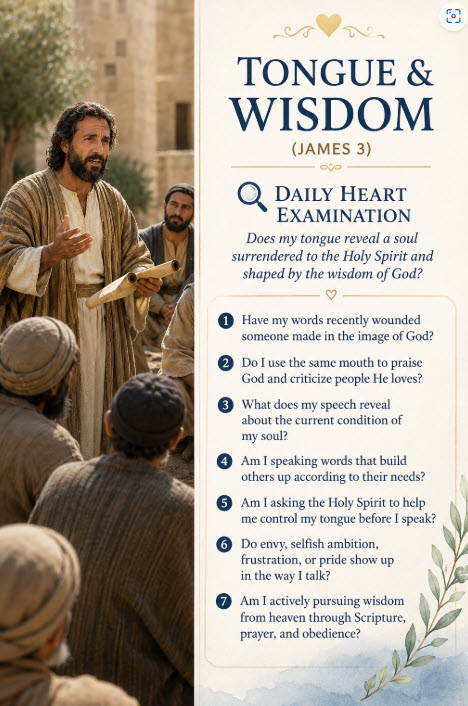
God wants His children to control their tongues by surrendering their souls to the Holy Spirit, speaking only what builds others up, and pursuing wisdom that comes from heaven.
💥 SINS / FAILURES
- Using the tongue to wound people made in the image of God (James 3:8–10; Genesis 1:27)
- Praising God while cursing, criticizing, or tearing down others (James 3:10–11; Matthew 12:34)
- Allowing an out-of-control soul to express itself through unwholesome speech (James 3:6; Ephesians 4:29)
- Speaking from envy, selfish ambition, pride, or emotional reaction instead of heavenly wisdom (James 3:14–16; Proverbs 18:21)
🏆 SUCCESSES / SPIRITUAL GROWTH
- Allowing the Holy Spirit to govern the words that come from the mouth (Galatians 5:22–23; James 3:17)
- Using speech to build others up according to their needs (Ephesians 4:29; Proverbs 15:23)
- Recognizing that the tongue reveals what is happening in the soul (Luke 6:45; James 3:11–12)
- Pursuing wisdom from heaven through God’s Word and the Holy Spirit (James 3:13–18; Proverbs 2:6)
🧭 LEADERSHIP DYNAMICS
- Godly leaders understand that speech can either strengthen or poison the people they influence (James 3:8; Proverbs 18:21)
- Healthy spiritual leadership refuses to excuse careless words as harmless (Matthew 12:36; Ephesians 4:29)
- Wise leaders model humble, helpful, Spirit-controlled communication (James 3:13; Colossians 4:6)
- Christian leadership requires soul-level maturity, not merely public teaching ability (James 3:1–2; 1 Timothy 4:12)
🌍 EKKLESIA (THE CHURCH) PERSPECTIVE
- The Church should be a family where words reflect adoption by the same Heavenly Father (John 1:12; Romans 8:15)
- Believers must not use the same mouth for worship and relational destruction (James 3:9–10; 1 John 4:20)
- A healthy local church grows stronger when members speak words that heal, encourage, and build up (Ephesians 4:15–16, 29)
- The Ekklesia displays heavenly wisdom when its relationships are marked by purity, peace, humility, and mercy (James 3:17–18; Philippians 2:3–4)