
📘 LESSONS LEARNED
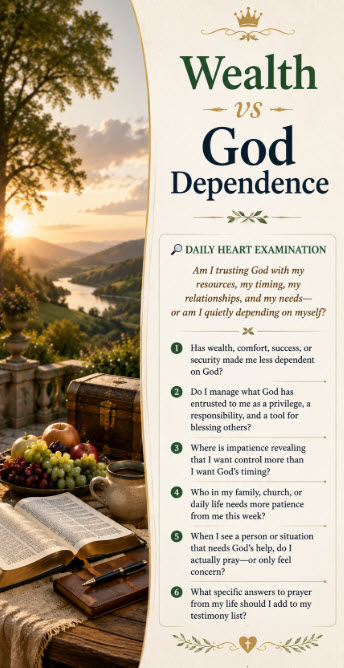
God calls His people to handle wealth with humility, grow in patience through His timing, and embrace prayer as the practical expression of dependence on Him.
💥 SINS / FAILURES
- Using wealth selfishly, unethically, or as a weapon against those with less (James 5:1–6; Proverbs 11:28)
- Allowing resources to produce self-reliance instead of God-reliance (Matthew 6:24–34; Matthew 19:24)
- Letting pride distort self-esteem, demean others, and push God away (Proverbs 11:2; James 4:6)
- Growing impatient with God, ourselves, family members, or ordinary daily frustrations (James 5:7–11; Ecclesiastes 7:8)
- Neglecting prayer when people, situations, or churches urgently need God’s intervention (James 5:13–18; Acts 4:31)
🏆 SUCCESSES / SPIRITUAL GROWTH
- Managing wealth as a God-given privilege and responsibility rather than a personal kingdom (1 Timothy 6:17–19; James 5:1–6)
- Practicing generosity that benefits others and honors God (2 Corinthians 9:6–8; Proverbs 19:17)
- Choosing God-reliance over self-reliance in decisions, resources, and relationships (Matthew 6:33; Proverbs 3:5–6)
- Growing in patience while trusting that God is working for His glory and our growth (James 5:7–11; Romans 5:3–5)
- Responding to need, pressure, and uncertainty with prayer instead of anxiety or control (James 5:13–18; Philippians 4:6–7)
🧭 LEADERSHIP DYNAMICS
- Healthy leaders teach believers that wealth must be stewarded under God’s authority, not used for pride or control (Luke 12:48; 1 Peter 5:2–3)
- Wise leaders help God’s people recognize the spiritual danger of self-reliance before it becomes hardened pride (Proverbs 16:18; Matthew 6:24)
- Faithful leaders cultivate patience in the church by reminding believers that God is working even when circumstances are difficult (James 5:7–11; Hebrews 10:36)
- God-honoring leaders model prayer as the first response, not the last resort (Acts 6:4; James 5:13–18)
- Discerning leaders help wealthy, needy, and vulnerable people relate with wisdom, compassion, and integrity (James 1:5; 1 Timothy 6:17–19)
🌍 EKKLESIA (THE CHURCH) PERSPECTIVE
- The church must not admire wealth blindly but must evaluate whether resources are being used in ways that honor God (James 2:1–7; James 5:1–6)
- The Ekklesia should be a community where generosity, compassion, and justice protect the vulnerable from exploitation (Acts 4:32–35; Galatians 6:10)
- Local churches grow stronger when believers practice patience with God, leaders, families, and one another (Ephesians 4:1–3; James 5:7–11)
- The praying church becomes a living witness that God is active, powerful, and responsive to His people (Acts 1:14; Acts 4:31)
- Every local church should keep a living testimony list of God’s responses to prayer across generations (Psalm 78:4; Acts 2:1–4)