
LESSONS LEARNED
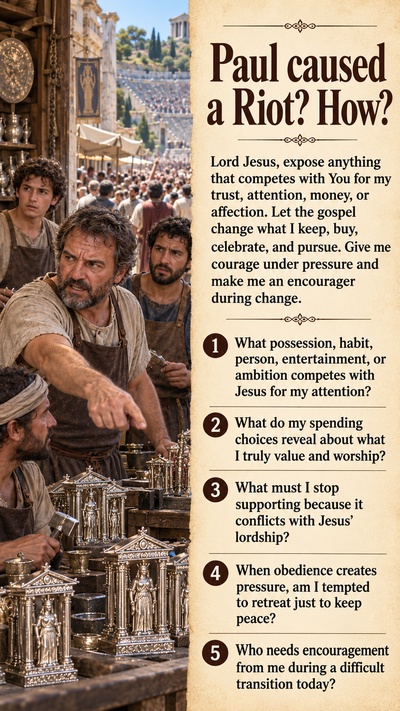
Saturday October 10, 2026 — “Paul caused a Riot? How?” (Acts 19:23–20:2). The Ephesian riot shows that the gospel can change worship, possessions, spending, and public life so deeply that entrenched interests push back, yet Paul keeps encouraging believers and moving forward in faithful ministry.
WATCH OUTS
- Do not assume spiritual change is private or economically neutral. In Ephesus, turning from idols altered purchasing behavior enough for craftsmen to fear for their income. (Acts 19:23–27).
- Do not confuse opposition with proof that the gospel is wrong. Demetrius called Paul’s influence misleading because it threatened both income and the honor of Artemis, while the apostolic message rejected gods made by human hands. (Acts 19:25–27; 17:29).
- Do not let possessions, collectibles, celebrity culture, or cherished objects become functional idols that compete with devotion to Jesus. The lesson presses the issue personally: what in the house distracts the heart from Christ? (Exodus 20:3–5; Acts 19:18–20).
SUCCESSES / SPIRITUAL GROWTH
- Let allegiance to Jesus reach practical habits. Ephesian believers did not merely add Christian language; their changed worship affected what they valued, kept, and purchased. (Acts 19:18–20, 26).
- Recognize the power of ordinary gospel witness multiplied across many lives. Demetrius’s complaint was that large numbers in Ephesus and the province of Asia had been persuaded that man-made gods are not gods. (Acts 19:26).
- Keep Jesus, not religious objects, at the center. The lesson presents freedom from idolatry as living in a forgiven relationship with the crucified, risen, ascended Christ through the indwelling Holy Spirit. (Acts 2:38; 1 Corinthians 6:19–20).
LEADERSHIP DYNAMICS
- Expect faithful ministry to disturb entrenched interests when those interests depend on practices the gospel calls people to abandon. Spiritual leaders should not measure faithfulness only by whether the surrounding culture remains comfortable. (Acts 19:23–27).
- Know when danger requires a transition rather than a needless showdown. After the riot, Paul encouraged the Ephesian believers, said goodbye, and departed for Macedonia. (Acts 20:1).
- When circumstances force a move, keep strengthening people. Paul traveled through Macedonia speaking many words of encouragement rather than allowing the riot to end his ministry focus. (Acts 20:1–2).
EKKLESIA PERSPECTIVE
- A church’s collective discipleship can become visible in a city when many believers change the same kinds of habits, loyalties, and expenditures. Gospel transformation can have a social footprint without the church seeking political control. (Acts 19:18–27).
- The church must distinguish the living Christ from objects of devotion made by human hands. Christian community should continually call people away from substitutes for God and toward exclusive loyalty to Jesus. (Acts 19:26; John 14:6).
- Healthy congregations need encouragement during disruption and transition. Paul gathered the Ephesian believers and strengthened them before leaving, then continued encouraging churches across Macedonia. (Acts 20:1–2).