
📘 LESSONS LEARNED
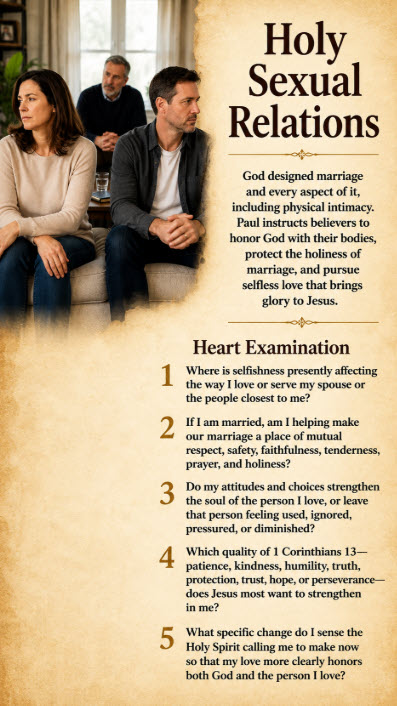
God designed marriage and marital intimacy to be treated with holiness, mutual respect, lifelong commitment, selfless love, and spiritual seriousness. Paul’s teaching calls husbands and wives away from selfishness and toward a marriage in which each seeks the good of the other while remaining alert to temptation and devoted to God.
💥 SINS / FAILURES
- Allowing selfishness to replace mutual service and tenderness in marriage, especially in physical intimacy (1 Corinthians 7:3–5; Philippians 2:3–4).
- Treating sexuality according to the surrounding culture rather than honoring God’s design for marital faithfulness and holiness (1 Corinthians 6:18–20; 7:2).
- Ignoring how temptation, resentment, lack of self-control, and relational distance can damage marriage (1 Corinthians 7:5; Ephesians 4:26–27).
🏆 SUCCESSES / SPIRITUAL GROWTH
- Receiving marriage and marital intimacy as gifts governed by holiness, mutual respect, love, safety, and lifelong commitment (Genesis 2:24; 1 Corinthians 7:2–4).
- Serving one another selflessly so marriage increasingly reflects patient, kind, non-self-seeking agape love (1 Corinthians 13:4–8; Ephesians 5:21).
- Using prayer, mutual agreement, self-control, communication, and renewed togetherness to protect marriage from temptation and drift (1 Corinthians 7:5; Galatians 5:22–23).
🧭 LEADERSHIP DYNAMICS
- Christian teaching should address marriage and sexuality reverently and biblically rather than surrendering these subjects to cultural distortion (1 Corinthians 7:1–5; Hebrews 13:4).
- Spiritual leaders should distinguish God’s good design from selfish distortions while speaking with dignity rather than sensationalism (Genesis 2:24; 1 Corinthians 6:18–20).
- Discipleship should connect marriage choices with sanctification, prayer, self-control, spiritual warfare, and Christlike love (1 Corinthians 7:5; 13:4–8).
🌍 EKKLESIA (THE CHURCH) PERSPECTIVE
- The Ekklesia should teach God’s design for marriage with truth, reverence, compassion, and practical wisdom rather than embarrassment or cultural compromise (1 Corinthians 7:1–5; Hebrews 13:4).
- Christian marriages should increasingly demonstrate fidelity, mutual service, patience, kindness, forgiveness, protection, hope, and perseverance (1 Corinthians 13:4–8; Ephesians 5:21–33).
- The church should encourage husbands and wives to help one another grow in holiness and protect their relationship from selfishness, temptation, isolation, and destructive relational patterns (1 Corinthians 7:5; Galatians 6:1–2).