
LESSONS LEARNED
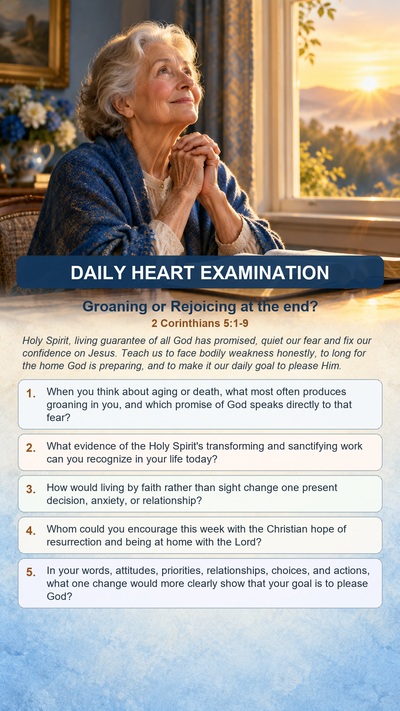
Monday, October 26, 2026 — “Groaning or Rejoicing at the end?” (2 Corinthians 5:1–9). Paul directs believers from the frailty of the earthly body to God’s eternal dwelling, the Spirit’s guarantee, confident faith, and a life whose goal is to please God.
WATCH OUTS
- Fear can make bodily decline feel like the end of everything. Paul names the earthly body a temporary tent so believers will not mistake its weakness for the loss of God’s promised future. (2 Corinthians 5:1–2; Psalm 39:4–7; Hebrews 2:14–15).
- Groaning without hope can turn suffering into despair. Pain and grief are honest human experiences, but they must be carried toward God’s resurrection promise rather than away from Him. (2 Corinthians 5:2–4; Romans 8:22–25; 1 Thessalonians 4:13–14).
- Sight alone cannot interpret death faithfully. If visible circumstances become the final authority, the believer’s confidence in Christ’s unseen promise will be displaced by anxiety. (2 Corinthians 5:7; Hebrews 11:1; John 20:29).
SUCCESSES / SPIRITUAL GROWTH
- God Himself prepares His people for eternal life. Our future is not self-made; the One who fashioned us supplies the promised dwelling and completes what His grace began. (2 Corinthians 5:1,5; Philippians 1:6; 1 Peter 1:3–5).
- The Holy Spirit is God’s living guarantee. His indwelling presence confirms belonging, advances sanctification, and assures believers that the promised inheritance is certain. (2 Corinthians 5:5; Ephesians 1:13–14; Romans 8:14–17).
- Faith produces courageous confidence about being with the Lord. Because Jesus rose, believers can face the end of earthly life with assurance rather than denial or terror. (2 Corinthians 5:6–8; John 11:25–26; Philippians 1:21–23).
LEADERSHIP DYNAMICS
- Faithful leaders tell the truth about aging, suffering, and death. They neither romanticize pain nor leave people without the resurrection hope secured in Christ. (2 Corinthians 5:1–4; Acts 20:27; 1 Thessalonians 4:18).
- Shepherds prepare people to die with Scripture, prayer, and worship. Bedside ministry should help believers rehearse God’s promises and turn their final attention toward Jesus. (Psalm 23:4; John 14:1–3; James 5:14–16).
- God-pleasing leadership begins before the crisis arrives. Words, attitudes, priorities, relationships, choices, and actions form a daily pattern of faithfulness that carries into suffering. (2 Corinthians 5:9; Colossians 1:10; 1 Peter 5:2–4).
EKKLESIA PERSPECTIVE
- The church is a people traveling together toward resurrection. Believers strengthen one another by holding bodily weakness and eternal hope in the same faithful conversation. (2 Corinthians 4:16–5:1; 1 Corinthians 15:51–54; Hebrews 10:23–25).
- Christian community makes hope audible at the bedside. Singing, recited Scripture, prayer, and loving presence can bear witness that death does not have the final word. (Acts 16:25; Colossians 3:16; Romans 12:15).
- A heaven-minded church learns to please God now. Eternal hope does not withdraw from present responsibility; it deepens holy service, reconciliation, and love while there is time. (2 Corinthians 5:9; Titus 2:11–14; 1 Corinthians 15:58).