
📘 LESSONS LEARNED
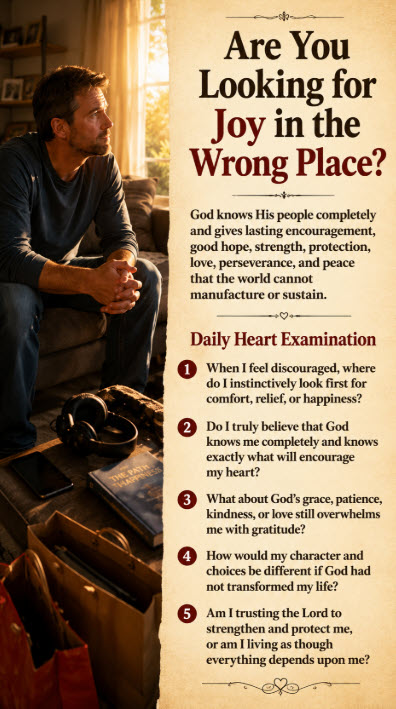
God knows His people completely and gives lasting encouragement, good hope,
strength, protection, love, perseverance, and peace that the world cannot
manufacture or sustain.
💥 SINS / FAILURES
- Seeking lasting joy from entertainment, possessions, relationships, or
experiences that can provide only temporary happiness
(Ecclesiastes 2:10–11; Jeremiah 2:13). - Forgetting that God knows exactly what will encourage and strengthen us
at the deepest level of life
(Psalm 139:1–4; 2 Thessalonians 2:16–17). - Allowing discouragement to make us doubt the faithfulness, protection,
or nearness of God
(Psalm 42:5; 2 Thessalonians 3:3).
🏆 SUCCESSES / SPIRITUAL GROWTH
- Receiving God’s eternal encouragement and good hope as gifts of His grace
rather than trying to manufacture happiness
(2 Thessalonians 2:16–17). - Remembering God’s grace, kindness, patience, and transforming work in our
own lives
(1 Timothy 1:12–16; Ephesians 2:4–5). - Trusting that the faithful Lord will strengthen and protect His people
from the evil one
(2 Thessalonians 3:3; John 17:15).
🧭 LEADERSHIP DYNAMICS
- Healthy spiritual leaders direct discouraged people toward God’s
faithfulness rather than merely offering motivational words
(Psalm 121:1–2; 2 Thessalonians 3:3). - Credible encouragement grows from truths leaders have personally lived
through suffering, opposition, and dependence upon God
(2 Corinthians 1:3–4; Acts 13–18). - Wise leaders distinguish between people who need patient encouragement
and people whose persistent disorder requires firm boundaries
(1 Thessalonians 5:14; 2 Thessalonians 3:6, 14–15).
🌍 EKKLESIA (THE CHURCH) PERSPECTIVE
- The Ekklesia should be a community where discouraged believers encounter
God’s truth, hope, strength, protection, and peace
(Hebrews 10:24–25; 2 Thessalonians 2:16–17). - A healthy church does not confuse momentary excitement with the lasting
encouragement produced by God’s grace
(John 15:11; Romans 15:13). - The church must lovingly confront idleness and disruptive behavior
because unchecked disorder damages the entire body
(1 Corinthians 5:6; 2 Thessalonians 3:6, 11–15).