
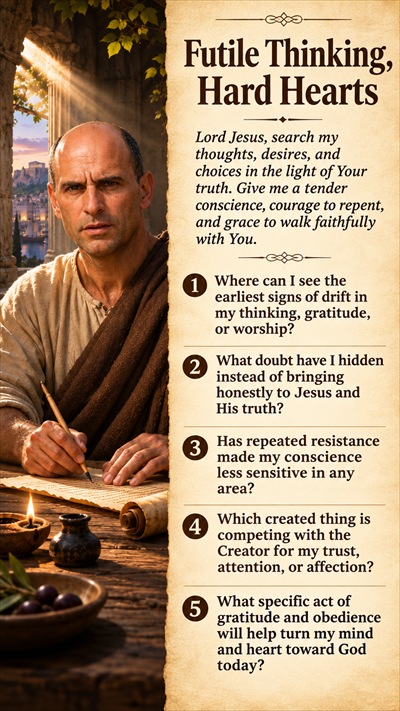
Lessons Learned — Futile Thinking, Hard Hearts
WATCH OUTS
- Spiritual drift often begins quietly. Small decisions to withhold worship or gratitude can become a settled direction away from God. Scripture: Romans 1:21; Hebrews 2:1; Deuteronomy 8:11–14.
- Doubt must be brought into the light. Questions can lead toward mature faith, but hidden doubt fed only by pride can distort the way we evaluate truth. Scripture: Mark 9:24; James 1:5–8; John 20:27–29.
- Hard hearts lose moral sensitivity. Repeated resistance to God dulls conscience and makes destructive desire seem normal. Scripture: Ephesians 4:18–19; Hebrews 3:12–13; 1 Timothy 4:1–2.
SUCCESSES / SPIRITUAL GROWTH
- Thanksgiving interrupts the downward spiral. Deliberate gratitude remembers God's goodness and resists the illusion that life is self-created. Scripture: Romans 1:21; 1 Thessalonians 5:16–18; Psalm 103:1–5.
- The mind can be renewed in Christ. The gospel does more than restrain behavior; the Spirit reshapes how believers perceive, desire, and choose. Scripture: Romans 12:1–2; Ephesians 4:22–24; Colossians 3:1–2.
- Sensitivity returns through practiced obedience. Responding promptly to conviction trains the heart to recognize God's voice and delight in His ways. Scripture: John 14:21; Hebrews 5:14; Psalm 119:34–37.
LEADERSHIP DYNAMICS
- Leaders must diagnose patterns, not only symptoms. Paul traces behavior back through desire, hardness, and futile thought so care can address the whole person. Scripture: Romans 1:21–25; Proverbs 4:23; Luke 6:43–45.
- Correction needs patience and truth. A servant of the Lord must not quarrel, yet must not abandon the hope that God can grant repentance. Scripture: 2 Timothy 2:24–26; Galatians 6:1; Ephesians 4:15.
- Guard the culture of worship. Communities centered on God's glory and gratitude are better equipped to expose counterfeit wisdom. Scripture: Colossians 3:16–17; 1 Corinthians 1:20–25; Psalm 95:1–7.
EKKLESIA PERSPECTIVE
- The church is a community of renewed minds. Believers learn together to reject the former way of thinking and to put on the life of Christ. Scripture: Ephesians 4:17–24; Philippians 2:5; 1 Corinthians 2:16.
- The church makes room for honest return. Those who have drifted need a truthful invitation home rather than either denial or contempt. Scripture: Luke 15:17–24; James 5:19–20; 2 Corinthians 2:7–8.
- The church worships the Creator, not the created. Corporate worship reorders love by praising the immortal God above every image, appetite, and cultural idol. Scripture: Romans 1:23–25; Revelation 4:8–11; 1 John 5:21.