
📘 LESSONS LEARNED
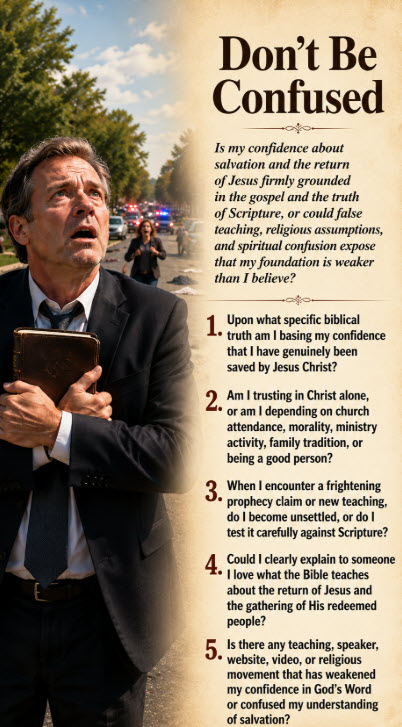
Believers must anchor their confidence in the gospel of Jesus Christ and the truth of Scripture so that false teaching, prophetic confusion, and spiritual opposition do not unsettle their faith or deceive them about their salvation.
💥 SINS / FAILURES
- Allowing alarming teachings, rumors, or confident religious voices to unsettle our faith without carefully testing their claims against Scripture
(2 Thessalonians 2:1–3; Acts 17:11). - Basing confidence of salvation on church attendance, good behavior, religious tradition, or personal opinion rather than genuine faith in Jesus Christ
(John 3:3–7; Ephesians 2:8–9). - Neglecting to understand foundational biblical truth about the return of Jesus and the gathering of His redeemed people
(1 Thessalonians 4:13–18; 2 Thessalonians 2:1–2).
🏆 SUCCESSES / SPIRITUAL GROWTH
- Developing a settled confidence in salvation that rests upon Jesus Christ, His gospel, and God’s saving work rather than human achievement
(John 5:24; Romans 8:1). - Returning to Scripture whenever troubling claims, confusing teachings, or prophetic speculation threaten spiritual stability
(Psalm 119:105; 2 Timothy 3:16–17). - Learning biblical prophecy carefully enough to explain the return of Christ and the believer’s hope to children, grandchildren, friends, and fellow believers
(1 Thessalonians 4:13–18; 1 Peter 3:15).
🧭 LEADERSHIP DYNAMICS
- Faithful spiritual leaders address confusion directly, clarify difficult doctrine, and restore confidence through careful explanation of Scripture
(2 Thessalonians 2:1–5; Nehemiah 8:8). - Leaders must distinguish between emotional reassurance and biblical assurance, refusing to give false confidence to people who have never genuinely trusted Christ
(Matthew 7:21–23; 2 Corinthians 13:5). - Sound leadership repeatedly reinforces essential truth because believers can forget, misunderstand, or become vulnerable to persuasive false teachers
(2 Peter 1:12–15; Titus 1:9).
🌍 EKKLESIA (THE CHURCH) PERSPECTIVE
- The Church must be a community where confused believers receive biblical clarification, patient instruction, and restored spiritual confidence
(2 Thessalonians 2:1–5; Ephesians 4:11–14). - Local churches must protect believers from deception by teaching the whole counsel of God rather than avoiding difficult prophetic passages
(Acts 20:27–31; 2 Timothy 4:1–4). - The Church must proclaim clearly that salvation comes through Jesus Christ, not religious activity, morality, family heritage, or association with Christianity
(Acts 4:12; Ephesians 2:8–9).