📘 LESSONS LEARNED
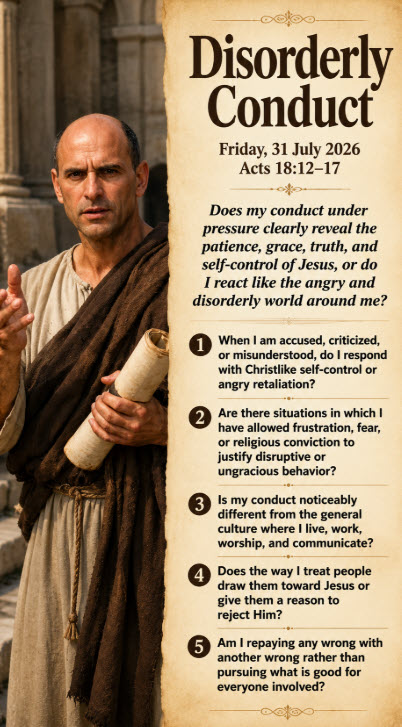
Friday, 31 July 2026 — “Disorderly Conduct” — Acts 18:12–17
Followers of Jesus should respond to hostility, confusion, and cultural disorder with spiritual maturity, patient endurance, faithful work, and conduct that clearly reflects the character of Christ.
💥 SINS / FAILURES
- Allowing anger, frustration, or religious zeal to produce disorderly and destructive behavior
(James 1:19–20; Proverbs 29:22). - Using intimidation, accusations, or mob pressure to silence people whose beliefs we oppose
(Acts 18:12–13; Exodus 23:1–2). - Repaying wrong with wrong instead of pursuing what is good for everyone
(1 Thessalonians 5:15; Romans 12:17–21).
🏆 SUCCESSES / SPIRITUAL GROWTH
- Remaining calm and faithful when falsely accused, threatened, or misunderstood
(1 Peter 2:21–23; Acts 18:12–17). - Responding to disruptive people with patience, encouragement, correction, and compassion
(1 Thessalonians 5:14). - Refusing to retaliate and consistently pursuing what is good for believers and unbelievers alike
(1 Thessalonians 5:15).
🧭 LEADERSHIP DYNAMICS
- Wise leaders discern the real issue beneath emotional accusations before making decisions
(Proverbs 18:13,17; Acts 18:14–16). - Spiritual leaders must contrast cultural disorder with clear instruction about Christlike conduct
(1 Thessalonians 5:14–15). - Effective leaders correct doctrinal misunderstanding before confusion produces destructive behavior
(Titus 1:9; 2 Thessalonians 2:1–3).
🌍 EKKLESIA — THE CHURCH PERSPECTIVE
- The Church should demonstrate a recognizable alternative to the anger, retaliation, and disorder of the world
(Philippians 2:14–16; John 13:34–35). - Local churches need patient correction, encouragement, support for the weak, and accountability for disruptive behavior
(1 Thessalonians 5:14). - The return of Jesus should produce holiness, hope, vigilance, and faithful service rather than irresponsible speculation
(1 Thessalonians 5:4–11; 2 Thessalonians 3:6–13).