
LESSONS LEARNED
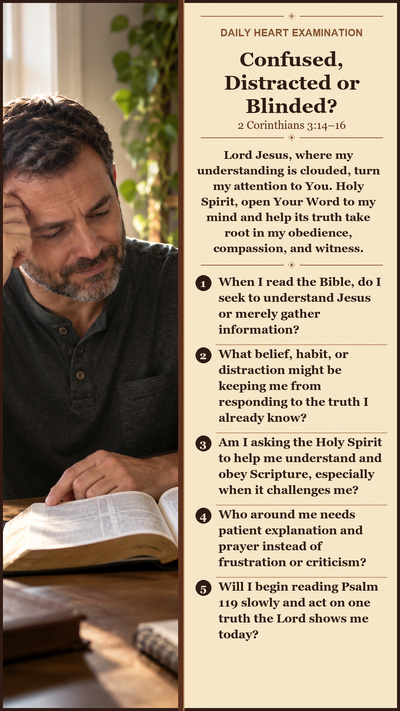
Tuesday, October 20, 2026 — “Confused, Distracted or Blinded?” (2 Corinthians 3:14–16). Paul teaches that a veil remains over hearts apart from Christ, but turning to the Lord brings its removal. This study considers spiritual blindness, the Holy Spirit’s illuminating work, and the church’s calling to patient, Scripture-centered witness.
WATCH OUTS
- Biblical literacy is not identical to spiritual sight. A reader may recognize the words yet miss their redemptive significance in Christ; never mistake familiarity with the text for understanding its message. (2 Corinthians 3:14–16; Luke 24:44–45; 1 Corinthians 2:14)
- Pride can make spiritual confusion harder to confront. Do not assume intelligence, schooling, or religious credentials can replace dependence on the Spirit and a willingness to turn to Christ. (1 Corinthians 2:12–14; Proverbs 3:5–7; John 5:39–40)
- Spiritual deception should not be dismissed as mere distraction. Paul explicitly warns that unbelievers can be blinded to the gospel; respond with prayer, truthful witness, and humility rather than contempt. (2 Corinthians 4:3–4; Ephesians 6:11–12; Colossians 4:2–4)
SUCCESSES / SPIRITUAL GROWTH
- Turning to the Lord is the decisive direction of spiritual understanding. The lesson centers on Christ, not a technique: God removes the veil as a person turns to the Lord. (2 Corinthians 3:16; Acts 26:17–18; John 8:12)
- The Holy Spirit helps believers discern and welcome God’s truth. Approach Scripture with prayer, attentiveness, and obedience, recognizing that the Spirit works through the inspired Word. (1 Corinthians 2:12–13; 2 Timothy 3:16–17; John 16:13–14)
- A growing hunger for Scripture is a healthy response to grace. The pastor directs hearers to Psalm 119: listen slowly, meditate, and ask God to shape daily choices through His Word. (Psalm 119:18; Psalm 119:105; 1 Peter 2:2)
LEADERSHIP DYNAMICS
- Effective Bible teachers aim for understanding, not mere information. Use clear explanations and appropriate visual support while repeatedly directing attention to Christ and Scripture. (Nehemiah 8:8; Luke 24:27; 2 Timothy 2:15)
- Spiritual leaders must teach with dependence on the Holy Spirit. Preparation and skill serve the ministry, but spiritual illumination is not manufactured by presentation techniques. (1 Corinthians 2:4–5; John 14:26; Zechariah 4:6)
- Patient discipleship leaves room for the moment when truth becomes clear. Do not shame a confused listener; explain again, listen carefully, and pray for God to open understanding. (2 Timothy 2:24–26; Acts 18:26; Colossians 1:9–10)
EKKLESIA PERSPECTIVE
- The church bears witness to Jesus as the fulfillment of God’s saving purpose. Teach the Old and New Testaments as one unfolding witness to Christ without suggesting the older Scriptures were worthless. (Luke 24:44–47; 2 Corinthians 3:14–16; Romans 3:21–22)
- The congregation should be a community where biblical questions are welcome. Make room for patient reading, discussion, and mentoring so that people can seek understanding together. (Acts 17:11; Colossians 3:16; Hebrews 10:24–25)
- A Spirit-taught church shares gospel hope with humility and courage. Pray for unbelievers, proclaim Christ rather than ourselves, and trust God to bring light into hearts. (2 Corinthians 4:5–6; Colossians 4:3–6; Matthew 28:19–20)