
📘 LESSONS LEARNED
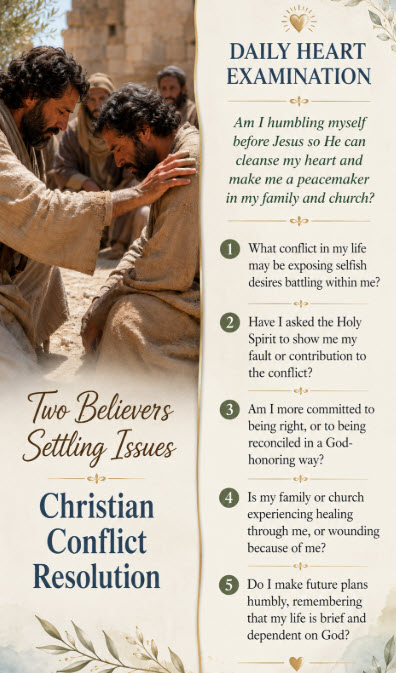
God-honoring conflict resolution begins when Christians humble themselves before the Lord, allow the Holy Spirit to expose their own contribution to the conflict, repent sincerely, and pursue reconciliation for the glory of Jesus.
💥 SINS / FAILURES
- Allowing selfish desires to turn disagreement into damaging conflict (James 4:1–4; Galatians 5:15)
- Protecting personal pride instead of humbling ourselves before the Lord (James 4:10; Proverbs 16:18)
- Wounding family members or church members through anger, isolation, or unresolved conflict (Ephesians 4:26–32; Colossians 3:13)
🏆 SUCCESSES / SPIRITUAL GROWTH
- Inviting the Holy Spirit to reveal our own fault or contribution to conflict (Psalm 139:23–24; John 16:8)
- Responding to conviction with repentance, cleansing, and correction before God (James 4:7–10; 1 John 1:9)
- Pursuing reconciliation with humility instead of defending pride or demanding victory (Matthew 5:23–24; Romans 12:18)
🧭 LEADERSHIP DYNAMICS
- Spiritual leaders must help people identify the heart-source of conflict, not merely manage surface behavior (James 4:1; Proverbs 20:5)
- Healthy leadership teaches believers to humble themselves before God before confronting others (James 4:10; Matthew 7:3–5)
- God-honoring leaders protect families and churches from becoming battlefields of pride, suspicion, and isolation (Ephesians 4:1–3; 1 Peter 5:2–3)
🌍 EKKLESIA (THE CHURCH) PERSPECTIVE
- The church should be a safe family where believers experience belonging, acceptance, healing, and spiritual growth (1 Peter 1:22; Ephesians 2:19)
- Church conflict gives the dark kingdom opportunity to wound hearts and weaken Christian witness (John 13:34–35; Ephesians 4:27)
- When Christians reconcile humbly, God is honored and the church displays the transforming power of Jesus (2 Corinthians 5:18–20; Colossians 3:12–15)