
📘 LESSONS LEARNED
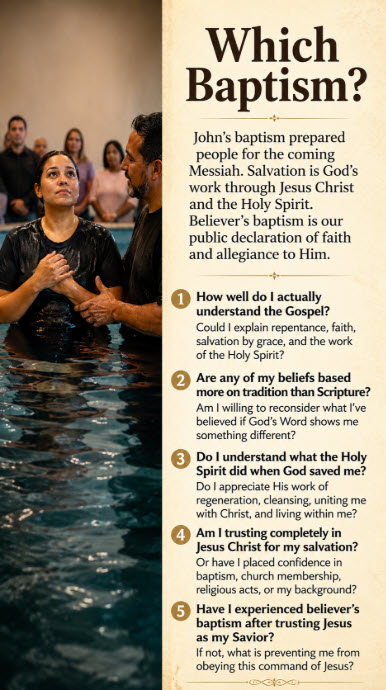
Biblical understanding matters. Paul discovered believers in Ephesus whose knowledge of Jesus and baptism was incomplete, so he patiently clarified the truth. John’s baptism prepared people for the coming Messiah, while believer’s baptism publicly declares a person’s faith in Jesus Christ and allegiance to Him. Salvation itself is God’s work, accomplished through Jesus Christ and applied by the Holy Spirit—not produced by water baptism.
💥 SINS / FAILURES
- Remaining satisfied with an incomplete understanding of biblical truth instead of allowing Scripture to correct and deepen our beliefs
(Acts 18:24–26; Acts 19:1–5; 2 Timothy 3:16–17). - Allowing Christian traditions, denominational customs, or personal assumptions to carry more authority than the clear teaching of Scripture
(Mark 7:8–9; Acts 17:11; Colossians 2:8). - Confusing a religious ceremony with the saving work of God and trusting an outward act rather than Jesus Christ alone for salvation
(Ephesians 2:8–9; Titus 3:5; Romans 10:9–10).
🏆 SUCCESSES / SPIRITUAL GROWTH
- Being willing to examine what we have been taught and allow the Word of God to bring greater clarity to our understanding
(Acts 17:11; Psalm 119:105; 2 Timothy 2:15). - Understanding that repentance and personal faith in Jesus Christ are foundational to genuine salvation
(Acts 19:4; Acts 20:21; Romans 10:9–10). - Recognizing and appreciating the powerful work of the Holy Spirit in regeneration, cleansing, union with Christ, and His continuing presence within every believer
(John 3:5–8; Titus 3:5; 1 Corinthians 6:11; 1 Corinthians 12:13; Romans 8:9).
🧭 LEADERSHIP DYNAMICS
- Effective spiritual leaders do not ignore confusion; they patiently discover what people actually understand and then teach the truth clearly
(Acts 18:24–26; Acts 19:1–5; 2 Timothy 2:24–25). - Good Bible teaching asks penetrating questions that expose incomplete assumptions and open the door for greater understanding
(Acts 19:2–3; Proverbs 20:5; Luke 24:17–27). - Spiritual leaders must distinguish biblical truth from inherited religious traditions and teach believers why they believe and practice what they do
(Matthew 15:3; Acts 17:11; Titus 2:1).
🌍 EKKLESIA (THE CHURCH) PERSPECTIVE
- Local churches should be places where biblical confusion is lovingly corrected and believers continually grow toward accurate understanding of Jesus and His Word
(Acts 18:26; Ephesians 4:11–15). - Christian unity must be built upon biblical truth rather than merely accepting contradictory beliefs because they carry a Christian label
(Ephesians 4:4–6, 13–15; John 17:17). - Baptism provides believers with a public opportunity to identify themselves openly with Jesus Christ and His people
(Acts 2:41–42; Galatians 3:27)