
📘 LESSONS LEARNED
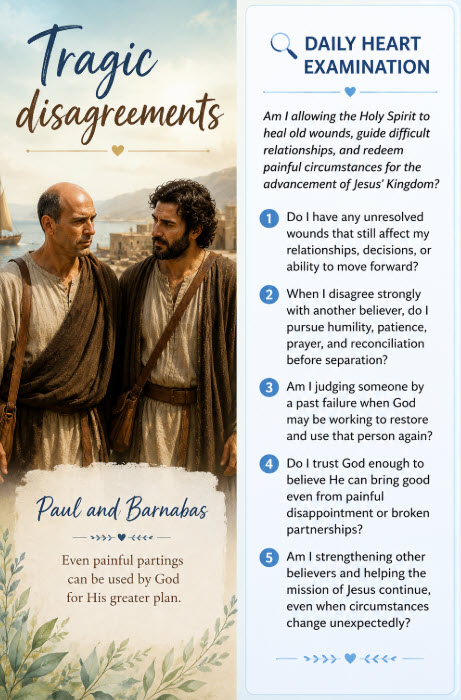
God can redeem even painful disagreements among faithful believers, transforming human conflict into multiplied Gospel mission when His people remain submitted to the leadership of the Holy Spirit.
💥 SINS / FAILURES
- Allowing old wounds to remain untreated until they influence relationships, decisions, and ministry partnerships (Ephesians 4:26–27; Hebrews 12:15)
- Letting sharp disagreement escalate into separation without full reconciliation, patience, and humble listening (James 1:19–20; Colossians 3:12–14)
- Judging another believer only by a past failure rather than considering repentance, growth, restoration, and future usefulness (Galatians 6:1; Philemon 1:11)
🏆 SUCCESSES / SPIRITUAL GROWTH
- Desiring to revisit and strengthen believers rather than merely celebrating past ministry success (Acts 15:36; Hebrews 10:24–25)
- Trusting God to continue His work even when relationships, plans, or ministry partnerships change painfully (Romans 8:28; Philippians 1:6)
- Remaining committed to Gospel advancement instead of becoming paralyzed by disappointment, conflict, or relational loss (Acts 15:39–41; 2 Corinthians 4:1)
🧭 LEADERSHIP DYNAMICS
- Strong leaders may disagree deeply, but disagreement must be handled with humility, truth, and submission to the Holy Spirit (Proverbs 15:1; Ephesians 4:1–3)
- Wise leadership includes discerning whether a past failure disqualifies someone from a current assignment or whether restoration is needed (Acts 15:37–38; 2 Timothy 4:11)
- God may redirect leadership relationships and form new teams in ways no one expected, while still advancing His mission (Acts 15:39–41; Proverbs 16:9)
🌍 EKKLESIA (THE CHURCH) PERSPECTIVE
- The Church must be mature enough to face conflict honestly without pretending godly people never disagree (Acts 15:39; Matthew 18:15–17)
- The Holy Spirit can multiply ministry impact even through painful circumstances that originally appear tragic or divisive (Acts 15:39–41; Romans 8:28)
- Healthy Ekklesia communities strengthen believers, commission workers, and continue the mission even when leadership partnerships change (Acts 15:40–41; Ephesians 4:11–16)