
📘 LESSONS LEARNED
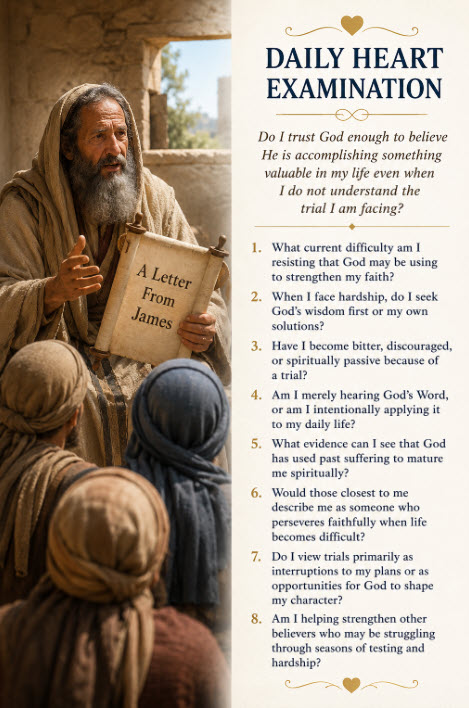
God often uses seasons of suffering, testing, and opposition to strengthen His people, deepen their faith, provide spiritual wisdom, and prepare them for greater usefulness in the advancement of the Gospel of Jesus Christ.
💥 SINS / FAILURES
- Complaining, becoming bitter, or questioning God’s goodness during trials instead of trusting Him (James 1:2–4; Philippians 2:14–15)
- Abandoning faithfulness to Jesus when opposition, suffering, or inconvenience arises (Matthew 13:20–21; James 1:12)
- Seeking worldly solutions while neglecting God’s wisdom through prayer and dependence upon the Holy Spirit (James 1:5–8; Proverbs 3:5–6)
- Living as though comfort and ease are God’s highest priorities rather than spiritual maturity and Christlikeness (Romans 8:28–29; James 1:2–4)
- Hearing God’s truth without allowing it to transform daily behavior and decisions (James 1:22–25; Luke 6:46)
🏆 SUCCESSES / SPIRITUAL GROWTH
- Viewing trials as opportunities for God to strengthen perseverance, character, and faith (James 1:2–4; Romans 5:3–5)
- Seeking God’s wisdom when facing difficult decisions and uncertain circumstances (James 1:5; Proverbs 2:6)
- Remaining faithful to Jesus despite pressure, ridicule, hardship, or spiritual opposition (James 1:12; Revelation 2:10)
- Growing in spiritual maturity through life’s challenges rather than becoming discouraged by them (James 1:3–4; Ephesians 4:13)
- Studying God’s Word carefully and applying it consistently to everyday life (James 1:22–25; Psalm 119:105)
🧭 LEADERSHIP DYNAMICS
- Great spiritual leaders leave written truth that continues strengthening believers long after their personal ministry is finished (James 1:1; 2 Timothy 3:16–17)
- Healthy leaders recognize suffering as a discipleship opportunity rather than merely a problem to remove (James 1:2–4; Romans 8:28–29)
- Spiritual leadership requires humility, demonstrated by James identifying himself primarily as a servant of Jesus (James 1:1; Mark 10:43–45)
- Leaders help believers interpret life through God’s perspective rather than through emotions or circumstances alone (James 1:2–5; Colossians 3:1–2)
- Faithful leaders equip God’s people to endure hardship with wisdom, stability, and confidence in God’s purposes (James 1:5–12; Ephesians 4:11–13)
🌍 EKKLESIA (THE CHURCH) PERSPECTIVE
- God strengthens His Church not only through preaching but also through Spirit-inspired written truth preserved and shared among believers (James 1:1; Colossians 4:16)
- The Church grows stronger when believers learn to persevere through trials together rather than retreating from hardship (James 1:2–4; Acts 14:22)
- God uses seasons of persecution and testing to mature His people and expand His Kingdom (James 1:12; Acts 8:1–4)
- The first generation of Christians depended upon faithful leaders who preserved and distributed biblical truth for future generations (James 1:1; 2 Timothy 2:2)
- The local church should help believers interpret suffering through a biblical lens and encourage one another toward endurance and faithfulness (Hebrews 10:24–25; James 5:13–16)