
📘 LESSONS LEARNED
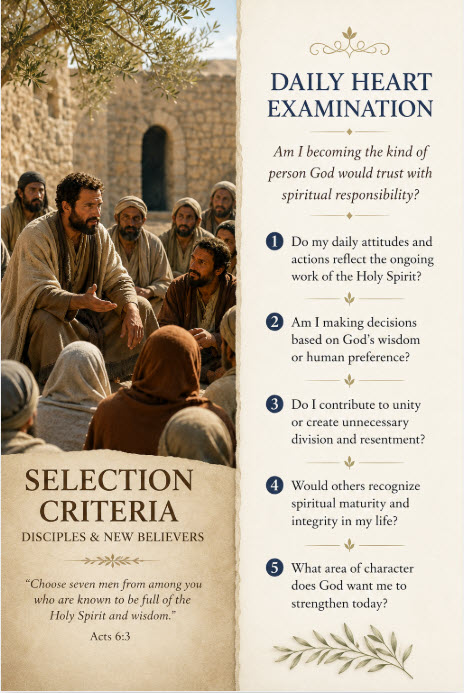
Godly leadership selection must be based on spiritual maturity, wisdom, integrity, and evidence of the Holy Spirit’s work rather than popularity, status, or human ability alone.
💥 SINS / FAILURES
- Choosing leaders based mainly on personality, power, popularity, or appearance (1 Samuel 16:7; James 2:1–4)
- Neglecting spiritual qualifications when assigning responsibility (1 Timothy 3:1–7; Titus 1:5–9)
- Allowing prejudice or favoritism to influence decision-making (Acts 6:1; James 2:9)
- Attempting to solve spiritual problems with only human wisdom (Proverbs 3:5–6; Zechariah 4:6)
- Ignoring the importance of wisdom shaped by reverence for God (Proverbs 9:10; Psalm 111:10)
🏆 SUCCESSES / SPIRITUAL GROWTH
- Selecting trustworthy people whose lives visibly reflect the Holy Spirit’s work (Acts 6:3; Galatians 5:22–23)
- Seeking wisdom from God before making important decisions (James 1:5; Proverbs 2:6)
- Involving the believing community in solving internal problems wisely and humbly (Acts 6:2–5; Philippians 2:2–4)
- Recognizing and valuing spiritually mature women and men within God’s work (Acts 6:3; Romans 16:1–3)
- Protecting unity by addressing problems early and biblically (Ephesians 4:3; Matthew 18:15–17)
🧭 LEADERSHIP DYNAMICS
- Healthy leaders recognize the limits of their own capacity (Acts 6:2; Exodus 18:17–23)
- Clear role distinction protects the mission and focus of ministry (Acts 6:4; Ephesians 4:11–12)
- Spirit-filled leadership requires observable character, not merely claims (Acts 6:3; Matthew 7:16)
- Internal problems must be addressed openly before they damage unity (Acts 6:1; Hebrews 12:15)
- Wise leadership structures allow God’s work to continue growing without organizational collapse (Acts 6:7; 1 Corinthians 14:40)