
“Truth with Confidence?” (2 Cor. 4:1-6)
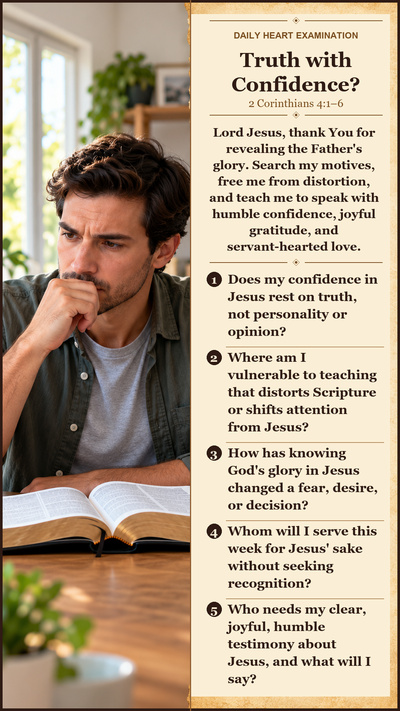
Scroll down for “Lessons Learned…”
LESSONS LEARNED
Thursday, October 22, 2026 – “Truth with Confidence?” (2 Corinthians 4:1-6). Paul and John show that Christian confidence is not self-promotion or rhetorical force. It is humble, truthful witness to Jesus Christ as Lord, Creator, incarnate Son, crucified and risen Savior, and the light who reveals God’s glory.
WATCH OUTS
- Confidence without truth becomes deception. Paul refuses secret or shameful methods, warning that persuasive speech is not faithful when it distorts God’s Word for personal benefit. (2 Corinthians 4:2; Jeremiah 23:16; 2 Timothy 4:3-4).
- Proclaiming ourselves displaces Jesus from the center. Christian witness loses its integrity when the messenger seeks attention, status, or control instead of presenting Jesus Christ as Lord. (2 Corinthians 4:5; John 3:30; Galatians 1:10).
- Repeated distortion can spread confusion widely. Believers must not mistake articulate delivery, global reach, or technological power for truth; every claim still requires biblical testing. (Ephesians 4:14-15; 1 John 4:1; Acts 20:29-30).
SUCCESSES / SPIRITUAL GROWTH
- God’s mercy gives His servants courage not to lose heart. Paul’s endurance grows from mercy received, so faithful witness can continue through resistance, weariness, and misunderstanding. (2 Corinthians 4:1; Hebrews 12:1-3; Galatians 6:9).
- God’s light brings the knowledge of His glory into human hearts. The Creator who commanded light to shine makes Jesus known inwardly and turns spiritual darkness toward understanding and hope. (2 Corinthians 4:6; Genesis 1:3; Ephesians 1:17-18).
- Eyewitness truth produces joyful, grounded testimony. John speaks with conviction because he saw, heard, and lived with Jesus; believers today grow by receiving and faithfully passing on that apostolic witness. (1 John 1:1-4; Acts 4:20; 2 Peter 1:16).
LEADERSHIP DYNAMICS
- Faithful leaders set forth the truth plainly. Clarity, careful handling of Scripture, and transparent motives help hearers examine the message before God rather than depend on a leader’s personality. (2 Corinthians 4:2; 2 Timothy 2:15; Titus 2:7-8).
- Christian leadership is servant leadership under Jesus. Paul identifies himself as a servant for Jesus’ sake, placing the good of others and the honor of Christ above personal advancement. (2 Corinthians 4:5; Mark 10:42-45; 1 Peter 5:2-3).
- Credibility grows from integrity in God’s sight. Leaders should welcome honest scrutiny and reject manipulation because their methods, motives, and message are lived before God. (2 Corinthians 4:2; 1 Thessalonians 2:3-5; 2 Corinthians 1:12).
EKKLESIA PERSPECTIVE
- The truth about Jesus unites God’s redeemed people. Across backgrounds and generations, believers share one identity through Christ’s blood and resurrection and belong to one reconciled body. (1 Corinthians 12:12-13; Ephesians 2:13-16; Colossians 3:11).
- The church carries Christ’s light into a confused world. A congregation’s words and visible life should direct attention to Jesus with truth, humility, and good works rather than add to the noise. (Matthew 5:14-16; Philippians 2:15-16; 1 Peter 2:9).
- Shared testimony deepens fellowship and courage. When believers faithfully repeat what the apostles proclaimed and encourage one another, fellowship strengthens and confident witness becomes communal. (1 John 1:3; Hebrews 10:24-25; Colossians 3:16).