
“Paul’s joy/pain relationship with Corinth” (2 Corinthians 7:6-10)
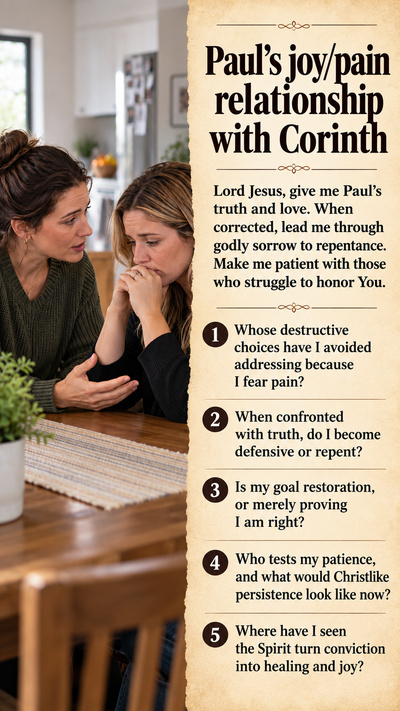
Scroll down for “Lessons Learned…”
LESSONS LEARNED
Friday October 9, 2026 — “Paul’s joy/pain relationship with Corinth” (2 Corinthians 7:6–10). Paul’s long, painful relationship with the Corinthian believers shows that loving confrontation may wound for a time, yet the Holy Spirit can use godly sorrow to bring repentance, healing, restored relationship, and renewed joy.
WATCH OUTS
- Do not confuse loving confrontation with retaliation. Paul’s painful words and visit were aimed at correction and restoration, not personal revenge. (2 Corinthians 1:23–2:1; 7:8–10).
- Do not assume that causing sorrow automatically produces spiritual good. Paul rejoiced specifically because their sorrow led to repentance; pain by itself is not the goal. (2 Corinthians 7:8–10).
- Do not give up on struggling believers simply because correction takes more than one conversation. Paul’s Corinthian relationship involved repeated letters, reports, a painful visit, and continued patient engagement. (1 Corinthians 5:9–10; 2 Corinthians 1:23–2:1; 7:6–10).
SUCCESSES / SPIRITUAL GROWTH
- Receive godly sorrow as an invitation to turn back toward God rather than merely feeling bad about consequences. Paul celebrates sorrow that produces repentance and leaves no regret. (2 Corinthians 7:9–10).
- Celebrate evidence of restored affection and concern. Titus reported the Corinthians’ longing, deep sorrow, and ardent concern, and that news changed Paul’s pain into great joy. (2 Corinthians 7:6–7).
- Remain persistent and patient with people who genuinely struggle to live Jesus-honoring lives. Paul’s continued investment in Corinth demonstrates durable love rather than quick abandonment. (Acts 18:1–18; 2 Corinthians 7:6–10).
LEADERSHIP DYNAMICS
- Strong spiritual leadership sometimes requires saying difficult things to people you deeply love. Paul did not avoid painful issues, but neither did he stop caring about how his words affected the Corinthians. (2 Corinthians 1:23–2:1; 7:8–9).
- Use trusted people to carry communication and bring back an honest report. Titus became an important relational bridge between Paul and Corinth. (2 Corinthians 7:6–7).
- Know when another immediate confrontation may do more harm than good. Paul explains that he chose not to make another painful visit at that moment in order to spare them. (2 Corinthians 1:23–2:1).
EKKLESIA PERSPECTIVE
- Healthy Christian community must make room for truth, sorrow, repentance, forgiveness, and restored relationship rather than pretending serious problems do not exist. (2 Corinthians 7:6–10).
- Churches should measure correction by its redemptive aim: are people being called back toward Jesus and toward healthy relationships, or merely being shamed? Paul rejoiced when sorrow moved toward repentance. (2 Corinthians 7:9–10).
- A congregation can be deeply imperfect and still worthy of persistent pastoral love. Corinth caused Paul unusual pain, yet he continued writing, visiting, praying, and hoping for their restoration. (Acts 18:1–18; 1 Corinthians 5:9–10; 2 Corinthians 7:6–10).