
“Is Resurrection in our Future?” (1 Cor. 15:22,23 & 1 Thess. 4:13-18)
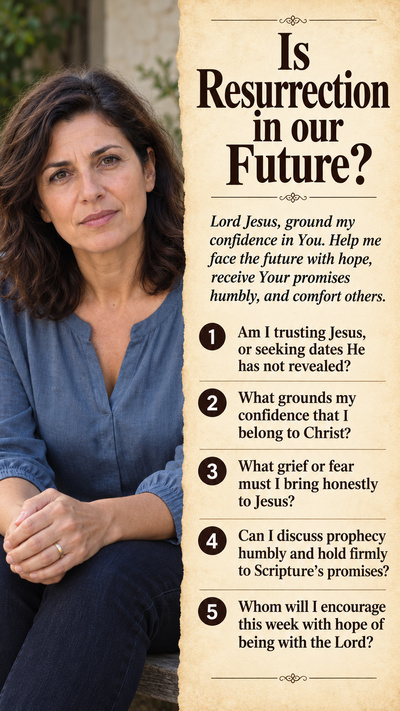
Scroll down for “Lessons Learned…”
LESSONS LEARNED
Friday October 2, 2026 — “Is Resurrection in our Future?” (1 Cor. 15:22,23 & 1 Thess. 4:13–18). The future raises many questions, but Paul directs our hope toward the risen Christ, His coming, and the promise of being with Him. The lesson invites honest assurance, comfort in grief, and humility about disputed details.
WATCH OUTS
- Do not turn curiosity about prophecy into certainty about dates God has not revealed. Let Jesus’ boundary restrain confident predictions (Acts 1:6–8; Matthew 24:36).
- Do not confuse familiarity with a prophetic timetable with belonging to Christ. Ground assurance in His saving work and promise (1 Corinthians 15:23; John 5:24; 1 John 5:11–13).
- Do not present disputed resurrection chronology as though every detail were explicit in the passage. Examine Scripture carefully and speak with humility (1 Thessalonians 4:13–18; Acts 17:11; 2 Timothy 2:24–25).
SUCCESSES / SPIRITUAL GROWTH
- Anchor future hope in Jesus’ completed resurrection. Christ is the firstfruits, and those who belong to Him await resurrection at His coming (1 Corinthians 15:20–23; 1 Peter 1:3–5).
- Bring grief into the light of Christ’s promise. Believers who have died are not forgotten, and His people will be together with Him (1 Thessalonians 4:13–18; John 11:25–26).
- Grow in faith that rests on God’s promise rather than on personal achievement. Abraham’s credited righteousness directs us toward trust in the God who raised Jesus (Genesis 15:6; Romans 4:18–25).
LEADERSHIP DYNAMICS
- Help uncertain people examine the gospel patiently. Invite honest questions and direct assurance toward Christ instead of a leader’s confidence (1 John 5:11–13; John 6:37; 2 Timothy 2:24–25).
- Distinguish the text’s stated sequence from a proposed end-times framework. Explain the dead in Christ rising and living believers joining them without adding an undisclosed date (1 Thessalonians 4:16–17; Acts 1:7).
- Teach prophecy so that people become faithful witnesses and compassionate encouragers. Knowledge about the future should produce useful love today (Acts 1:7–8; 1 Thessalonians 4:18; Hebrews 10:23–25).
EKKLESIA PERSPECTIVE
- Comfort grieving members with the promise that Christ will gather His people. Make room for sorrow while holding firmly to resurrection hope (1 Thessalonians 4:13–18; Romans 12:15).
- Keep the shared hope of belonging to Christ central while discussing disputed details with patience and humility (1 Corinthians 15:23; Ephesians 4:2–6; 2 Timothy 2:24–25).
- Let study lead into encouragement, worship and practical faithfulness. Share Christ’s promise with someone who needs hope this week (1 Thessalonians 4:18; Colossians 3:16–17; Hebrews 10:24–25).